
A founder in Berlin signs up for a virtual office in Dubai, gets the trade license within a week, and books flights to celebrate. Six weeks later, the bank turns down the corporate account. The license is valid. The address is real. The account still gets rejected because the address on paper never translated into anything a compliance officer could call a working business.
This happens more often than people expect. A virtual office in Dubai is one of the fastest ways to get a company registered in the UAE, and for most service businesses, freelancers, and consultants, it works exactly as intended. But the setup has rules that founders skip past because the marketing around it makes it sound simpler than it is. Here’s where it usually goes wrong.
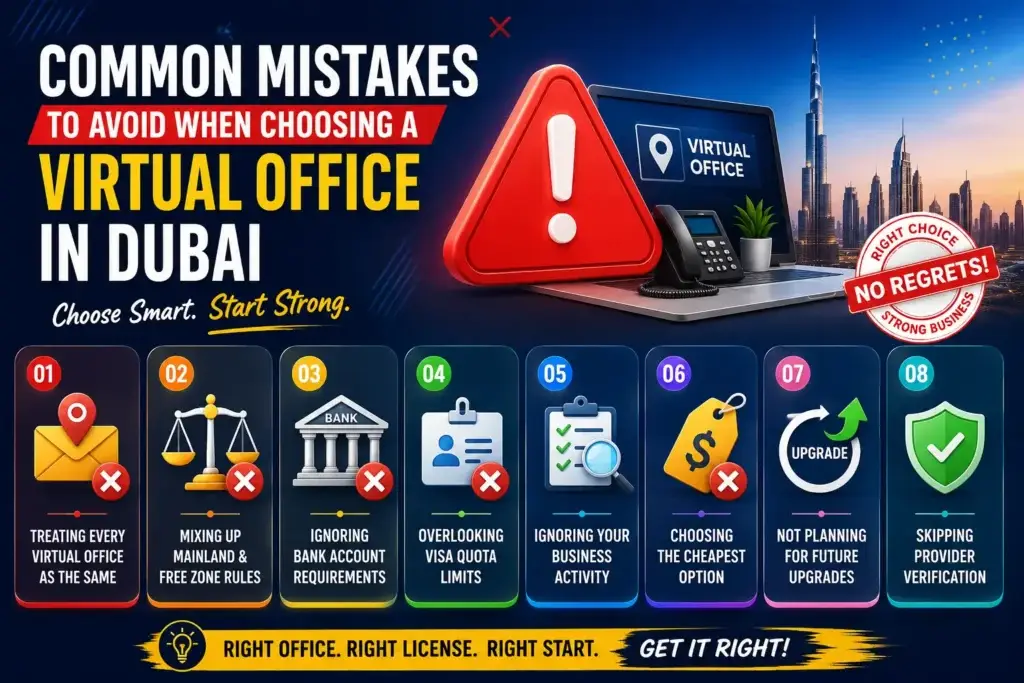
Treating every virtual office as the same product
“Virtual office” gets used loosely. Some providers mean a mailing address with nothing behind it. Others mean a flexi-desk package that’s actually recognized by the licensing authority, complete with a lease document and access to a real desk if you ever need one. Only the second kind gets your company formation in UAE approved.
Before paying anyone, confirm:
- Whether the package includes an authority-issued lease agreement, not just a mailing address
- Whether the specific free zone or department you’re licensing under recognizes that provider
- Whether the agreement is renewable, and at what cost, before your first year is up
A basic mailing address without an authority-backed agreement won’t clear licensing, and it definitely won’t survive a bank’s due diligence later.
Assuming mainland and free zone rules are interchangeable
This is the mistake that trips up the most people. In most free zones, a flexi-desk or virtual office arrangement is enough to get you licensed. On the Dubai mainland, under the Department of Economy and Tourism, the standard is different: a physical, Ejari-registered tenancy is required for the vast majority of commercial and professional activities.
A pure virtual address without Ejari generally won’t get a mainland license issued, and it certainly won’t get one renewed. If you’re planning to trade across the wider UAE market rather than staying within a free zone’s scope, check this before you commit to any package, not after.
Also Read – Mainland vs. Freezone: 5 Secrets to Choosing Your Dubai Freezone Company Formation
Skipping the banking conversation entirely
Getting the license is the easy part now. Opening a corporate bank account is where virtual office setups run into trouble. UAE banks operate under strict AML and KYC frameworks, and a virtual-only address is one of the most common triggers for a rejected application, right after vague or overly broad business activities.
Compliance officers are looking for economic substance: evidence that a company actually operates somewhere, not just that it’s registered somewhere. A flexi-desk with real access tends to satisfy this. A bare mailing address usually doesn’t. If your business will need a functioning bank account soon after setup, factor banking requirements into your office choice from day one instead of discovering the gap during KYC review.
Not matching the package to visa needs
Most virtual office and flexi-desk packages come with a visa quota attached, often just one to three visas depending on the tier. Founders sometimes pick a package based on price alone, then find out later it can’t sponsor the number of visas their team actually needs.
If you know you’ll be bringing on staff or applying for dependent visas within the year, confirm the quota upfront rather than assuming it can be adjusted after the license is issued.
Ignoring the business activity itself
A virtual office suits certain activities and not others:
- Usually fine: consulting, digital services, trading intermediation, and other asset-light activities
- Usually not fine: healthcare, F&B, retail, and any activity requiring inventory, a showroom, staff presence, or regulatory inspection
Confirm your specific activity code against the requirements before assuming a virtual setup will cover it. This single check prevents most of the licensing delays people run into.
Choosing the cheapest provider without checking approval status
Not every business center offering a “virtual office in Dubai” is actually authorized by the relevant free zone or government department to issue a compliant lease agreement. Some resell space they don’t have approval to sublease, which surfaces as a problem only when the license comes up for renewal or when a bank asks for verification. A lower price on a virtual office package that later fails renewal costs more than a slightly higher one that holds up.
The takeaway
Choosing between a virtual office, a flexi-desk, or a physical space isn’t just a cost decision. It’s a decision about what your license, your bank, and your business activity actually need to function. Getting it right at the start saves you from re-doing the setup later.
Choosing the right office setup shapes everything that comes after it: your license, your bank account, and how smoothly your business runs day to day. OnTime Business Setup helps you match the right virtual office, flexi-desk, or physical space to your specific activity and goals, so your company formation in UAE holds up at every stage, not just at licensing. Get in touch with our team to find the setup that actually fits your business.
Also Read – Benefits of Starting a Company in UAE Free Zones
Frequently Asked Questions
1. Is a virtual office legal for company formation in UAE?
Yes, when it’s sourced through a licensed free zone or a business center approved by the relevant department. The legality depends entirely on whether the provider and the package are recognized by the licensing authority.
2. Can I use a virtual office for a Dubai mainland company?
Only for a limited set of activities. Most mainland licenses require Ejari-registered physical space, since the Department of Economy and Tourism treats a pure virtual address as insufficient for the majority of commercial and professional categories.
3. What’s the difference between a virtual office and a flexi-desk?
A virtual office typically covers a registered business address and mail handling. A flexi-desk goes further, giving you shared workspace access along with the address, which is why banks and some authorities view it as stronger evidence of a working business.
4. Will a virtual office affect my chances of opening a bank account?
It can. Banks assess economic substance as part of their KYC review, and a virtual-only address is a common rejection trigger. A flexi-desk or physical office generally reduces that friction.
5. How many visas can I get with a virtual office package?
It depends on the provider and free zone, but most entry-level packages come with one to three visa allocations. Confirm the exact number before signing, especially if you plan to hire.
6. Can I upgrade from a virtual office to a physical space later?
In most free zones, yes. You can typically move to a flexi-desk, dedicated desk, or full office within the same jurisdiction without restarting the license process.
7. How much does a virtual office in Dubai cost?
Packages vary widely by free zone, location, and services included, generally ranging from a few thousand dirhams to over AED 20,000 annually. Premium addresses in areas like DIFC or Downtown Dubai cost more than packages in outer commercial zones.
8. Which business activities are not suitable for a virtual office?
Activities that require a physical presence for operations or inspection, such as healthcare, food and beverage, retail, and certain regulated professional services, generally need real office or facility space regardless of licensing authority.
9. Do all free zones offer virtual office options?
No. Some free zones only offer flexi-desk or physical office packages, not a standalone virtual address. Confirm what’s actually available in your chosen free zone before assuming a virtual option exists.
10. How do I know if a virtual office provider is authorized?
Check whether the provider’s lease or tenancy agreement is recognized directly by the free zone authority or government department issuing your license. If a provider can’t confirm this in writing, treat that as a warning sign.
Also Read – Virtual Office in Dubai: Is It Legal for Company Formation?